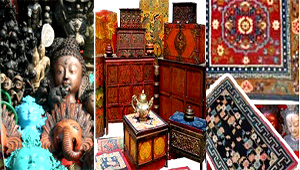
SHOPPING IN NEPAL
Nepal has many fine handicrafts to offer to visitors hand-knotted woollen carpets, jewellery, pashmina shawls, woollen knitwears, embroidery, thangka paintings, mithila painting, wood carvings, metalworks, ceramics and pottery, rice paper and stationary.
Woodwork
Woodcraft is the speciality of the Newar artisans of the Kathmandu Valley. Among the items that you may wish to purchase while in Kathmano its making, and the details that have been worked into it. However, windows and frames are not the only items on sale. Statues of gods, erotic carvings, traditional fig ures, and carvings with modern motifs are also available. The wooden images are made by using tools that were used a thousand years ago.
Metalwork
The metal work is also exceptional. Statues of high quality are available for prices ranging from a few thousand rupees to gold inlaid life-sized works. The lost was method is used to create these works of art. The wax figure is covered with clay and put in the sun to dry. Once ready, the wax is melted out and molten metal poured into the clay hollow. When the metal cools down and sets, the clay covering is destroyed and careful work with hammer, chisel and sanding material follows. The metal statue is then painted as per the specifications of reli gion or as per the request of the client.
Gurkha Khukuri is one of its kind of knives found only in Nepal. Price ranges according to the hardness of the blade and the origin of its make. Nepal are excellent and ornate knives for decor are also available
Carpets
Tibetan carpets are popular floor coverings in Europe and much af Nepal's foreign exchange earnings have come from the sale of carpets in the past two decades. The designs are traditional as well as modern. The modern designs have been created by some of the best artists working today in Europe and the products of the better manufacturers have graced many a Tibetan rug collection. Today, special effort is being made to break into the American and Japanese markets with special designs and quality rugs.
Gems and Jewellry
Nepal has some of the best goldsmiths and silver smiths in the worid, i.e. the Newar craftsmen, who have been delighting collectors and royal patrons with their exquisite creations for more than 600 years. So if you've ever wanted to own the finest jewellry, at a fractian of the cost you'd pay at home, Nepal is the place.
Nepal's most distinctive gems are the exquisite tourmalines from the eastern ranges, in pink, sunset rose, peach, golden, amber and green. There are very rare lime-green tourmalines that are found novdhere else, and some with more than one color in a single stone. The newly-discovered lemon-yellow tourmalines are especially fine.
Thangkas and Paubhas
For hundreds of years, scroll paintings have decorated the walls of monasteries, temples, and homes in East Asia.
Especially, the Tibetan and Newar styles come from a time when these cultures were at their peak. Most of the older surviving scroll paintings are reminders of a period when the rulers and the public were concentrating upon the arts as offerings to the deities.
Mithila Paintings
The Mithila paintings, known as Madhubani paint ings in India and Janakpur paintings in Nepal, are a common practice among the women of southern Nepal. The wind, sun, and rain very easily discolor these wall paintings, but they were not designed to withstand climate and time. The paintings, in fact, are usually painted over with clay when the women house clean for the next festival.
Handwoven Cloth
Many weavers in the Valley produce handwoven cot ton cloth of many colors and patterns. Visitors will find beautifully designed clothing and fabrics in Kathmandu's shops. The Magars of western Nepal also weave fabrics for readymade gar ments. Tussar which is the best Nepalese silk is not shiny but has a nat ural glow. It is made from an undomes ticated forest worm found in the south ern jungle regions. The Newars of the Kathmandu Valley and the Rai people of eastern Nepal have passed on the tradition of making blockprinted paper and cloth to modern producers.
Paper Products
Traditional Nepalese paper, popularly known as "rice paper" is actually made of lokta bark found in remote areas of the coun try. Because of its strength, govern ment offices use it for official docu ments. Many stores in Thamel and Patan sell writing pads and bound jour nals, as well as calendars and lamp shades of lokta paper.
Baskets
In the Terai region, bas kets used for household and decorative purposes are made from grass. The baskets come in different shapes and sizes according to their application. Raw jute which is one of Nepal's largest exports is grown in the southern Terai region and made into baskets and other materials.
Practicalities
There are govern ment restrictions that visitors should be aware of before purchasing items to take home. Antiques are not permitted to be taken out of Nepal. An inspection by the Department of Archaeology is required for any exports of antiques. To be on the safe side, visitors should have antique Tibetan carpets, old thangkas, and metal statues examined by the Department of Archaeology. They should then obtain a certificate from the office before leaving Nepal.